Your network infrastructure is an opportunity.

Khadga Consulting helps service providers, data center operators, and the investors backing them identify and cut through the real problems at the intersection of network engineering, business strategy, and organizational reality. Simultaneously.

Book an Introductory Call

The hardest network problems aren’t just network problems.

You bring in a network engineer and they see a network problem. You bring in a management consultant and they see an organizational problem. You bring in a financial advisor and they see a capital allocation problem. You’ve heard this story: everyone’s touching a different part of the elephant. They’re not wrong; they’re just not seeing the whole animal.

The result: solutions that address one layer while the others quietly undermine them. An automation program that stalls because the org wasn’t built to sustain it. An acquisition that closes on paper but never integrates in practice. An infrastructure asset that never realizes its full value because the right decisions weren’t made early enough.

Network infrastructure problems are almost always three problems at once: technical, organizational, and commercial. The work is figuring out which is which — and what to do about all three.

The sword cuts through.
So do we.

Khadga Consulting

Khadga (KHA-d-juh) is the Sanskrit word for sword. But we’re not named after just any sword. The Prajna Khadga is the flaming sword of knowledge wielded by Manjushri, the bodhisattva of wisdom, who uses it to cut through ignorance. A parallel figure in Western mythology is Prometheus, who stole fire from the gods and gave it to us humans. The act in both cases is the same: knowledge that was inaccessible becomes available. Clarity replaces confusion. Things that seemed immovable start to move.

The wisdom Khadga shares is specific to network infrastructure: how to build, operate, and grow networks for the greatest possible business advantage. The ignorance we cut through is the assumption that doing so is a technology-only challenge.

This work has never mattered more than it does right now.

The First Era
Can it work?

The first ~30 years of computer networking were all about figuring out if this experiment would work at all, and what protocol might come out on top. By the 1980s it was clear that TCP/IP was feasible as a global Internet.

The Second Era
Can it work better?

The next three decades focused on the user experience. Making networking faster, more reliable, eventually invisible. By the 2010s we had smartphones, tablets, sensors, and wireless connectivity almost everywhere, even on international flights.

The Third Era
Can it work smarter?

Now we must turn our focus to the network operator experience. The individuals and organizations who own and operate the networks that facilitate our connectivity-driven economy deserve our attention. Whether service provider, data center, or otherwise, we all benefit from well-operated networks, and we all suffer when they fall short. The explosion of AI infrastructure has only increased the urgency.

The third era brings challenges and opportunities:

  • You just acquired additional infrastructure and need to integrate two networks into one — architecture, product rationalization, and staffing — without losing customers or momentum in the process.
  • You operate a data center and need help with the network side: carrier relationships, interconnection positioning, MMR buildout, or understanding what it would take to become a primary hub in your market.
  • You’re a service provider trying to modernize operations — more automation, less toil, faster delivery — and the technology isn’t the hard part anymore.
  • You’ve invested in network automation and it’s not taking hold. The tools are in place but the organization hasn’t changed around them, and the toil isn’t actually reducing.
  • You’re negotiating an agreement — wholesale, interconnection, IRU, or otherwise — where the technical terms have long-term commercial consequences and you need someone who understands both sides of what’s being signed.
  • You’re building or buying data center assets and need to get the network architecture and connectivity right — carrier diversity, interconnection strategy, MMR planning — and ensure the decisions made now expand your upside.
  • You’re building a new network operator from scratch and need someone to think through the whole picture at once: products, architecture, vendor stack, workflows, regulatory requirements, and go-to-market.
  • You need technical and commercial due diligence on a network infrastructure asset before you close — a real assessment, not a checkbox exercise.
  • You own fiber infrastructure — between buildings, through a rural buildout, or inherited from an acquisition — and you need to figure out whether and how to monetize it.
  • You’re building a platform company in the digital infrastructure space and need someone who can hold the technical, operational, and commercial picture simultaneously as you make foundational decisions.
  • You own or operate network infrastructure and need a trusted voice who’s seen it before.
Chris Grundemann

“His ability to cut through the noise and see the relevant elements and data in any situation is remarkable. He absorbs and synthesizes data quickly, finds the leverage points, focuses on what matters, and delivers results.”
— Andy Fisher, Founder & CEO, Myriad360

“Chris has the vision to shape the direction of IP networks, from both a business and technical perspective, and has demonstrated the ability to present and defend his vision at every level within an organization.”
— Bill Lake, Director of Sales, Nokia

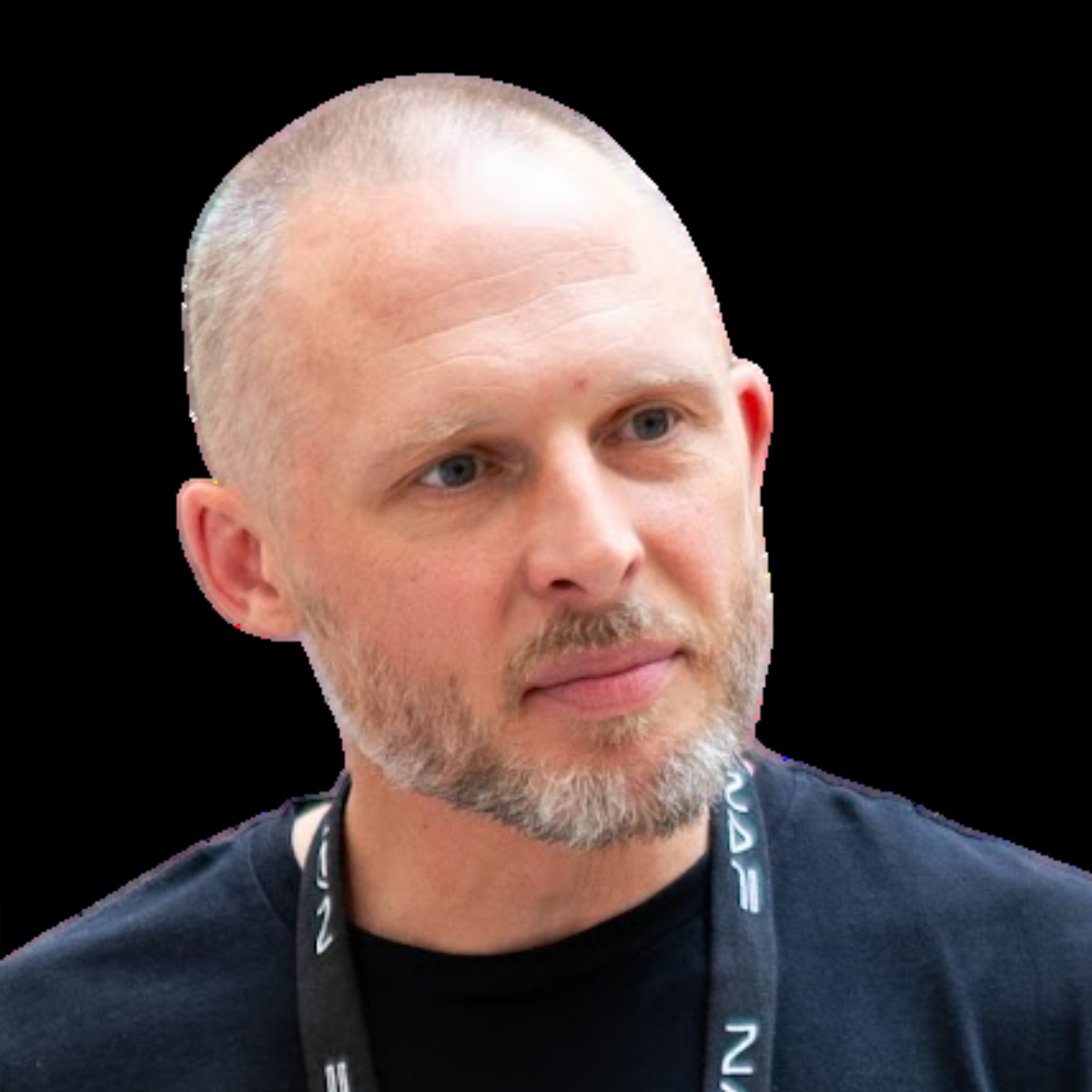
Chris Grundemann

Founder & Principal Advisor

My edge is simple: I learn fast and synthesize well. Walk me into a complex situation — two networks that need to become one, a fiber asset that needs to become a business, an infrastructure acquisition that needs to realize its value — and I can hold the technical details, the organizational dynamics, and the commercial consequences in the same frame at the same time.

That’s not common. Most people who can configure a router can’t read a cap table. Most people who can redesign an org chart have never designed a network. I’ve spent twenty years doing all three — building networks, companies, and communities.

I co-founded IX-Denver, the largest internet exchange in the Rocky Mountain region. I founded the Network Automation Forum and organize AutoCon, the industry’s leading conference on network automation. I serve as Chair of the OIX Association, focused on open standards for interconnection and digital infrastructure. I’ve been a network architect at scale, a research analyst, a startup co-founder, and an advisor to operators across four continents.

I hold 8 patents in network technology, have published two books on IPv6 with Juniper Networks, and contributed to IETF standards including RFC 7422.

What ties all of it together: the ability to walk into a room full of information and noise, find the real problem, and chart a path through it.

Start with a conversation.

Every Khadga engagement begins the same way: a direct, unhurried conversation about your situation. No pitch deck. No predetermined solution. You bring the situation. Together we’ll find the real problem and navigate the path through it.

Book a call with

Chris Grundemann

Founder & Principal Advisor, Khadga Consulting

Book an Introductory Call